

Two-way radio walkie talkie with VHF/UHF frequency range 136-174MHz/400-520MHz, 5/8W RF output power, 128 channels and 5-10km theoretical communication distance, powered by 7.4V lithium battery for professional communication.


Two-way radio walkie talkie with VHF/UHF frequency range 136-174MHz/400-520MHz, 5/8W RF output power, 128 channels and 5-10km theoretical communication distance, powered by 7.4V lithium battery for professional communication.
Professional VHF/UHF Two-Way Radio with 128 Channels and 5-10km Communication Range
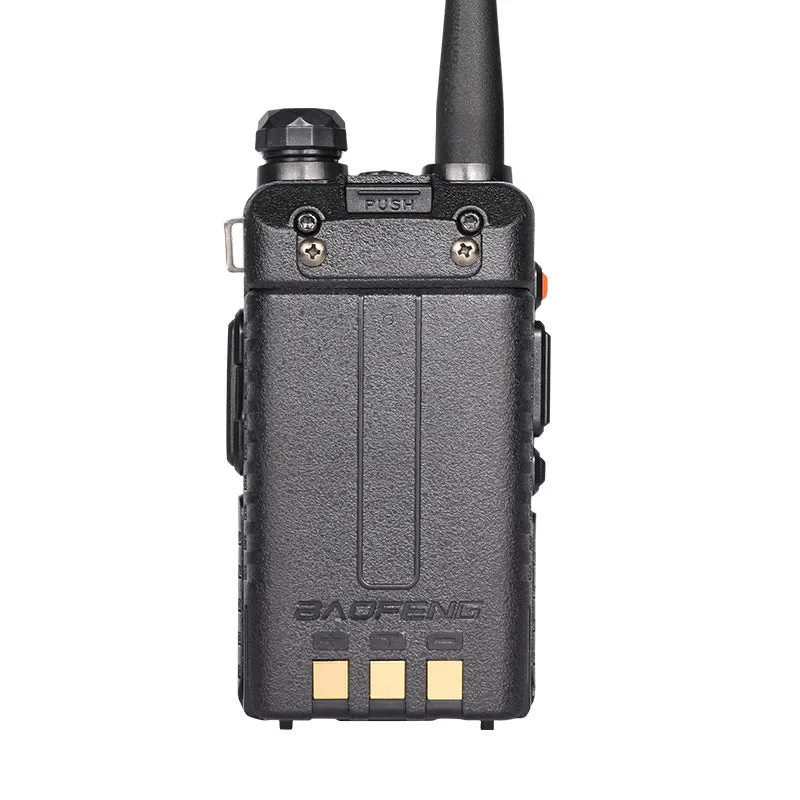
This two-way radio provides a practical communication solution for scenarios requiring reliable, immediate contact without cellular network dependency. Operating across both VHF (136-174MHz) and UHF (400-520MHz) frequency bands, it offers flexibility in various environments, from outdoor coordination to indoor professional use. The substantial 5/8W RF output power supports clear transmission over its theoretical 5-10km range, while 128 programmable channels allow for organised group communication with minimal interference.
Features and Construction
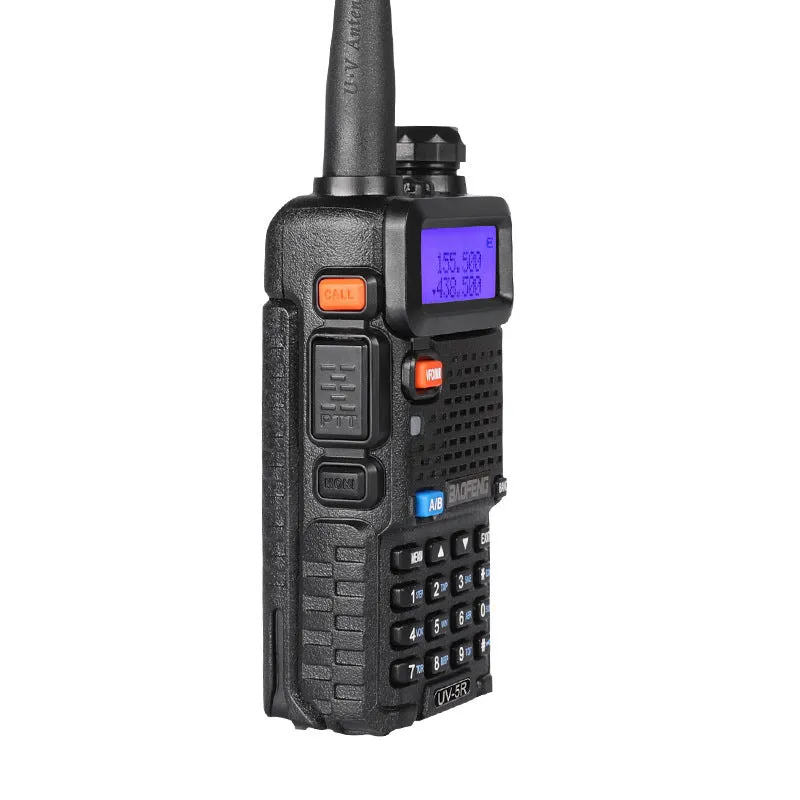
The radio's specification sheet details a communication device built around core performance metrics rather than aesthetic features. Its construction prioritises functional reliability across defined frequency bands with measurable output characteristics.
Material and Build
The device is powered by a 7.4V lithium battery, which provides the energy for its transmission and reception functions. This power source supports a theoretical battery life of up to 2500 hours of operation, though actual runtime will depend on transmission patterns and environmental conditions. The unit's frequency stability is maintained at ±5 parts per million (ppm), contributing to consistent channel performance.
Size and Practical Fit
With compact dimensions of 110mm in height, 58mm in width, and 32mm in depth (excluding antenna), the radio is designed for portability and easy handling. This size makes it suitable for carrying in a pocket, holster, or bag, supporting mobile use in field operations, event coordination, or security patrols where hands-free operation or quick access is beneficial.
Uses and Placement
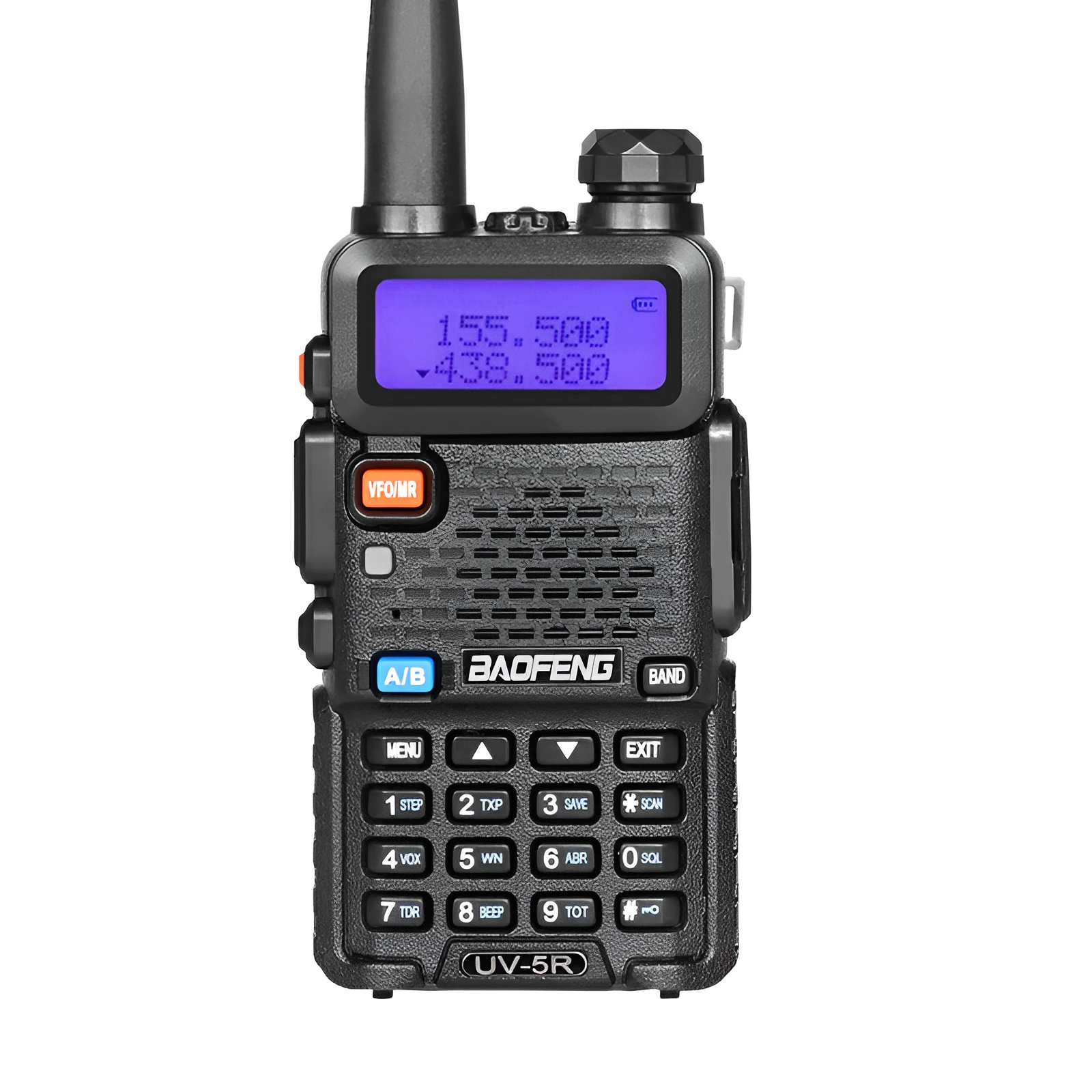
The dual-frequency capability and channel flexibility make this radio applicable across multiple professional and recreational contexts where instant, group-based communication adds efficiency or safety.
Event or Professional Use
For event management, security teams, or construction site coordination, the 128 channels allow separate groups to operate simultaneously without cross-talk. The monitoring function enables users to listen to channel activity before transmitting, preventing interruptions. The theoretical 5-10km range, supported by 5/8W output, suits medium-scale venues, outdoor festivals, or dispersed work teams where line-of-sight conditions are reasonably clear.
Everyday Home Use
While designed with professional specifications, the radio could serve organised hobby groups, neighbourhood watch schemes, or large property management where simple, licence-free (subject to local regulations) communication is valued over mobile phones. The card-free operation simplifies setup, and the lithium battery reduces ongoing power costs compared to disposable battery models.
Benefits and Buying Value

The value proposition centres on reliable functionality within its specified parameters, the efficiency of multi-channel group communication, and the practical advantages of its power system and range.
Reuse and Low Maintenance
The rechargeable 7.4V lithium battery supports repeated use cycles, aligning with cost-effective operation over time. With no complex software or subscription cards required (communication type: no card), the device offers straightforward reuse across different projects or teams. Its solid-state construction, implied by the lack of moving parts in the specification, suggests low physical maintenance needs.
Why Choose This Product
This two-way radio suits users needing a capable, no-fuss communication tool with verifiable technical specifications. The combination of dual-band frequency coverage, substantial channel count, measurable output power, and defined range provides a clear performance framework. It represents a practical choice for coordinators, team leaders, or organisers who prioritise functional reliability and operational flexibility over advanced digital features.
