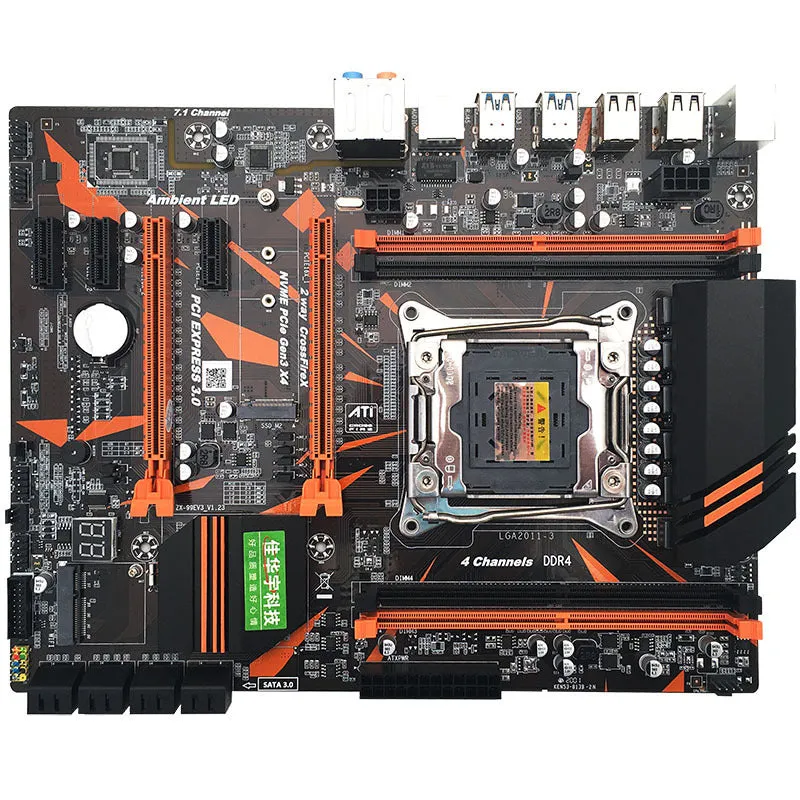
X99 chipset computer motherboard for LGA2011-3 socket Intel Core i7 and Xeon processors with quad-channel DDR4 memory support and dual PCI-E x16 graphics card slots in black


X99 chipset computer motherboard for LGA2011-3 socket Intel Core i7 and Xeon processors with quad-channel DDR4 memory support and dual PCI-E x16 graphics card slots in black
X99 Chipset Motherboard for LGA2011-3 CPUs with Quad-Channel DDR4 and Dual PCI-E Slots

This X99-series motherboard is built around Intel's high-performance desktop platform, centred on the LGA2011-3 processor socket. It is designed to harness the power of Intel's Core i7 and Xeon V3-series processors, such as the 5820K and 5960X, providing a robust foundation for demanding computing tasks, content creation, and gaming. The board's core strength lies in its support for quad-channel DDR4 memory, significantly increasing bandwidth over dual-channel setups, and its expansive connectivity options, including multiple high-speed storage interfaces and graphics card slots. With integrated gigabit networking and 7.1-channel audio, it serves as a comprehensive solution for building a powerful desktop system.
Processor and Memory Specification

The motherboard's capabilities are defined by its CPU compatibility and memory architecture, which are critical for system performance.
LGA2011-3 CPU Socket
The board features an LGA2011-3 socket, specifically intended for Intel's high-end desktop (HEDT) and workstation processors. It supports the 2011-v3 pin-out CPUs, which include the enthusiast-grade Core i7 series and the Xeon E5-1600 v3 and E5-2600 v3 series. It is important to note a specific compatibility detail: when using an Intel Core i7 processor, server-grade Registered ECC memory modules cannot be used simultaneously. This socket provides the physical and electrical interface for these powerful CPUs, facilitating complex multi-threaded workloads.
Quad-Channel DDR4 Memory
Memory performance is enhanced through a quad-channel architecture, utilising four DDR4 DIMM slots. This configuration supports memory speeds of 2400MHz or 2333MHz and can accommodate a maximum capacity of 128GB using 32GB modules. The board accepts both standard unbuffered desktop memory and Registered ECC memory, the latter typically used with Xeon processors for enhanced data integrity in professional environments. The quad-channel design doubles the available memory bandwidth compared to dual-channel systems, benefiting memory-intensive applications like video editing, 3D rendering, and scientific simulations.
Expansion and Storage Connectivity

A key advantage of this platform is its extensive expansion potential, allowing users to add high-performance components and ample storage.
Graphics and General Expansion Slots
For graphics capabilities, the motherboard provides two PCI-E x16 slots, enabling support for multiple graphics cards in CrossFire or SLI configurations for enhanced gaming or GPU-accelerated computing. Additionally, three PCI-E x1 slots are available for adding smaller expansion cards, such as dedicated sound cards, USB hubs, or capture cards. This flexible slot layout allows users to tailor the system's functionality to their specific needs.
High-Speed Storage Interfaces
Storage connectivity is comprehensive, featuring eight SATA 3.0 ports with 6Gbps bandwidth for connecting multiple hard drives or SATA SSDs. For the fastest available storage performance, the board includes a full-speed M.2 PCIe NVMe interface. This slot allows for the installation of NVMe solid-state drives, which connect directly via the PCIe bus, offering significantly higher sequential read and write speeds compared to SATA-based SSDs, drastically reducing system and application load times.
Integrated Features and Build Details
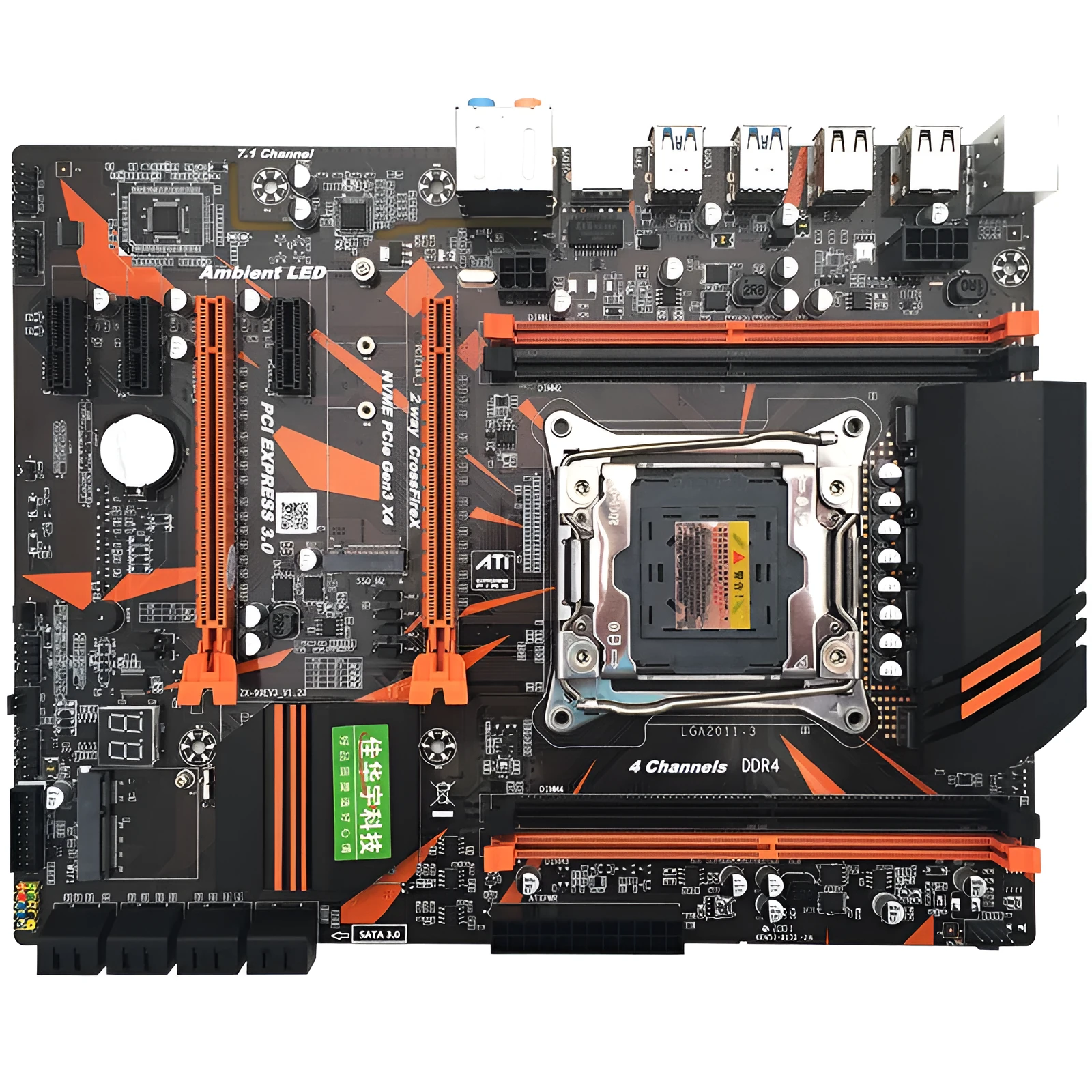
The motherboard incorporates several built-in features and construction elements designed for reliability and user convenience.
Integrated Audio, Networking, and I/O
Audio is handled by an integrated 7.1-channel sound chip, providing multi-channel output for gaming and multimedia through the rear-panel audio jacks. Networking is managed by a built-in Realtek RTL8111H gigabit Ethernet controller, offering stable wired internet connectivity. The rear I/O panel includes a PS/2 combo port for legacy keyboards or mice, an RJ-45 network port, four USB 3.0 ports, four USB 2.0 ports, and the 7.1-channel audio outputs, providing a solid base level of connectivity.
Power Design and Diagnostic Aids
Power delivery to the CPU is managed by a four-phase VRM design, supported by both a 24-pin ATX main power connector and an 8-pin EPS12V CPU power connector (which can operate with a 4-pin connector in certain configurations). To assist with troubleshooting, the board is equipped with a digital fault diagnosis display, often called a debug LED or POST code display, and a system speaker (buzzer). These tools provide visual and audible cues to help identify issues during the system boot process. An additional feature is an eight-colour LED audio trace lighting and a dedicated interface for adding a WiFi expansion card.