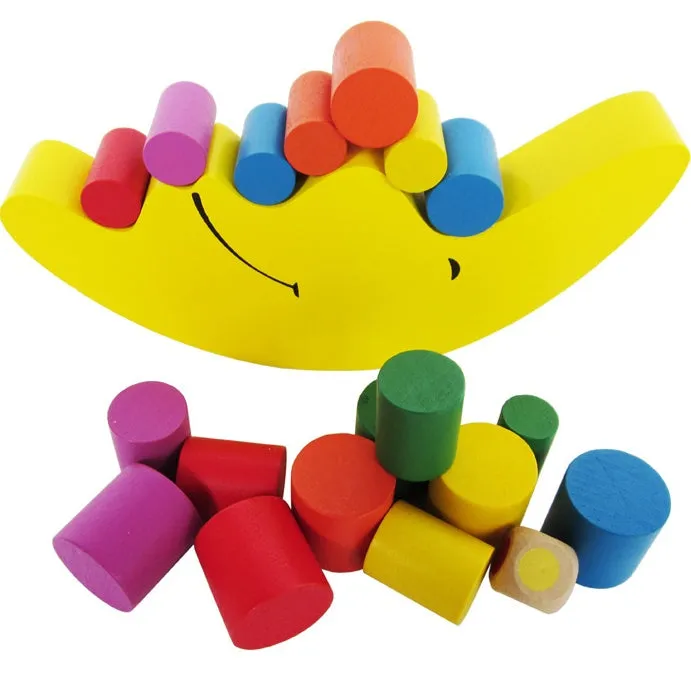
Children's wooden balance game toy for ages 2-4 years old boys and girls, Moon themed colour-coded stacking game with yellow and blue pieces, measuring 19.5cm by 15.5cm by 3cm for developing fine motor skills and family play


Children's wooden balance game toy for ages 2-4 years old boys and girls, Moon themed colour-coded stacking game with yellow and blue pieces, measuring 19.5cm by 15.5cm by 3cm for developing fine motor skills and family play
Moon Wooden Balance Game Toy for Children Aged 2 to 4 Years Old

This colourful Moon-themed wooden balance game is designed as an engaging developmental toy for young children, specifically those between the ages of 2 and 4 years. Its vivid yellow and blue wooden pieces and compact form factor provide a focused activity that encourages fine motor skill development, colour recognition, and basic stacking principles. The design promotes not only solo play but also interaction, making it suitable for adults and the whole family to participate, turning playtime into a shared experience. With its 100% wooden construction, this toy offers a classic, tactile feel distinct from electronic alternatives.
Features and Construction

The Moon balance game centres on simple, effective mechanics tailored for a toddler's capabilities. Its construction and size are defined to be manageable for small hands while presenting a clear, achievable challenge.
Material and Build
The toy is constructed entirely from wood, as confirmed by the source material. This choice of material provides a solid, durable base for the game pieces and offers a traditional sensory experience different from plastic toys. The pieces are finished in the colours yellow and blue, creating a vivid and contrasting visual appeal intended to capture and hold a young child's attention. The build focuses on the core balance game mechanic without extraneous electronic components.
Size and Practical Fit
The game's overall dimensions are clearly specified as 19.5cm in length, 15.5cm in width, and 3cm in height. This compact size makes it easy to store on a shelf, in a toy box, or to take along for travel or visits. It is important to note that these measurements are manual, and a minor variance of approximately 0.3cm may be present. The scale of the toy is designed to be appropriate for the motor skills of a 2-4 year old, with pieces sized for easy grasping and manipulation.
Uses and Placement
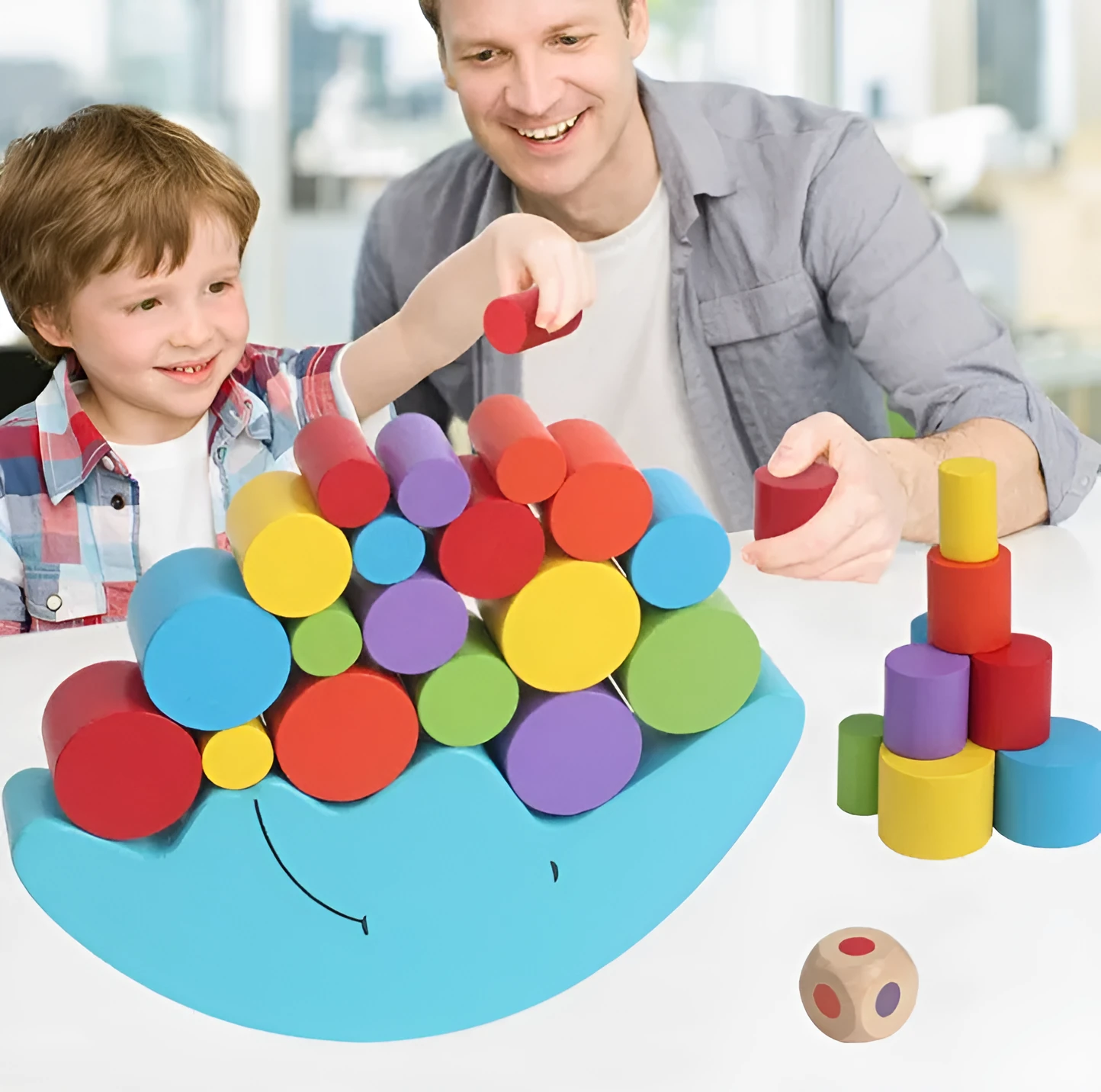
The primary function is as a balance and stacking game, but its applications extend into various settings, from individual play to social interaction.
Event or Professional Use
While fundamentally a children's toy, its design allows for use in group settings. It could serve as an activity station in early years environments like nurseries or preschools, where its non-messy, contained play is advantageous. The fact that adults can join in makes it suitable for family events, playdates, or waiting rooms where a shared, calm activity is beneficial. Its wooden construction is generally perceived as robust for such shared-use scenarios.
Everyday Home Use
At home, this toy provides a focused play session away from screens. It can be used on a tabletop, floor mat, or any flat surface. The age specification of 2-4 years guides its placement as a key toy during those developmental years, potentially aiding in concentration and dexterity. Its compact nature means it doesn't require a dedicated large play area and can be easily integrated into a child's existing toy rotation.
Benefits and Buying Value
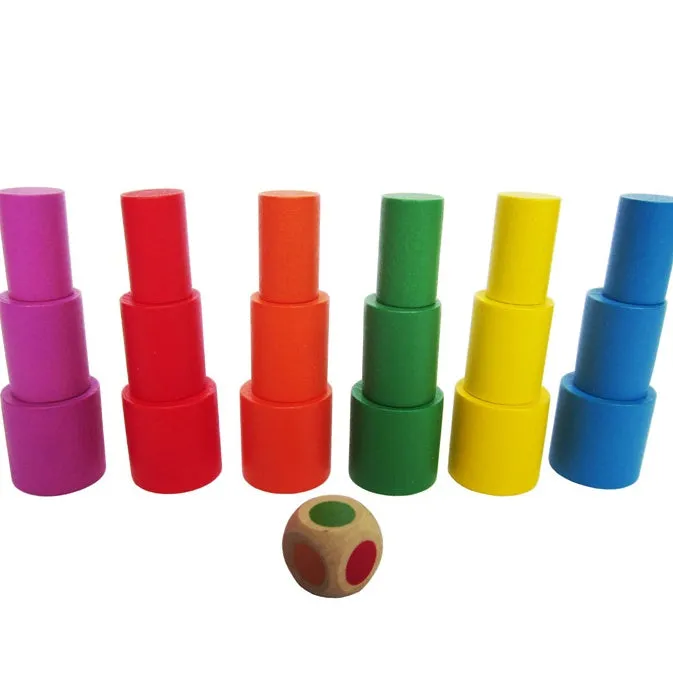
The value of this product lies in its focused design, material choice, and potential for repeated use within its target age range.
Reuse and Low Maintenance
Made from wood, the toy is inherently wipe-clean and does not require batteries or complex assembly, suggesting straightforward maintenance and longevity through its usable years. Its classic game principle—balancing and stacking—is inherently replayable, offering continued challenge and engagement for a child as their skills develop from ages 2 through 4. The durable material supports this repeated use.
Why Choose This Product
This balance game stands out for its clear age targeting, specific wooden construction, and defined colour scheme of yellow and blue. It avoids overcomplication, focusing instead on a core skill-building activity. The inclusion of the whole family in its potential use case adds a social dimension not always emphasised in toddler toys. When compared generically to other early learning toys, its value is in providing a tangible, screen-free activity with a defined physical outcome.