Tungsten steel 4-blade end mill with 35-degree helix angle for precision milling and engraving, available in cutting diameters from 1mm to 12mm and function lengths from 3mm to 36mm, suitable for professional and hobbyist CNC applications.

Tungsten steel 4-blade end mill with 35-degree helix angle for precision milling and engraving, available in cutting diameters from 1mm to 12mm and function lengths from 3mm to 36mm, suitable for professional and hobbyist CNC applications.
Tungsten Steel 4-Blade End Mill for CNC Milling and Engraving with Multiple Size Options
This tungsten steel end mill, featuring four cutting blades and flutes, is a precision tool engineered for CNC milling, routing, and engraving machines. It is designed to handle detailed contouring, pocketing, and 3D profiling tasks in various materials, making it a versatile component for machine shops, fabrication workshops, and advanced hobbyist setups. The tool is offered in a practical range of cutting diameters, from a fine 1mm up to 12mm, paired with corresponding function lengths from 3mm to 36mm. This selection allows users to match the tool closely to their project requirements, whether for shallow engraving or milling operations with a maximum cutting depth of 50mm. Its construction from tungsten steel aligns with industry standards for durable cutting tools that maintain a sharp edge.
Features and Construction
The core design of this end mill focuses on providing effective material removal and a clean finish through its specified geometry and build.
Material and Build
The tool is made from tungsten steel, a material recognised in machining for its hardness and ability to withstand the friction and heat generated during cutting. This material choice contributes to the tool's performance in milling applications without the need for specialist coatings or treatments as mentioned in the source data. The tool features four effective cutting edges and four flutes (slots), which work together to evacuate chips from the cutting area during operation, helping to maintain cutting efficiency and surface quality on the workpiece.
Size and Practical Fit
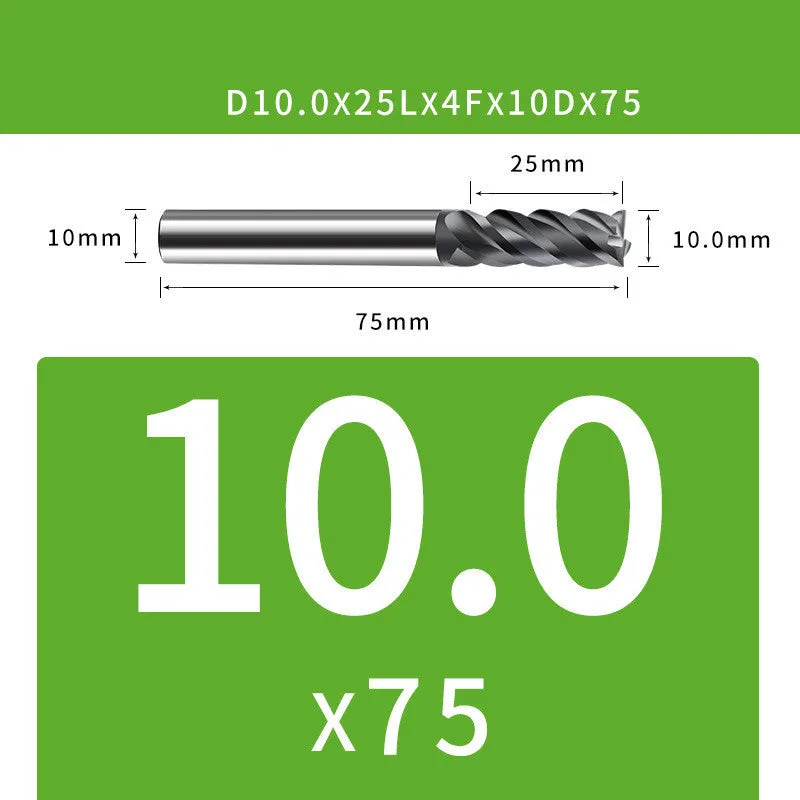
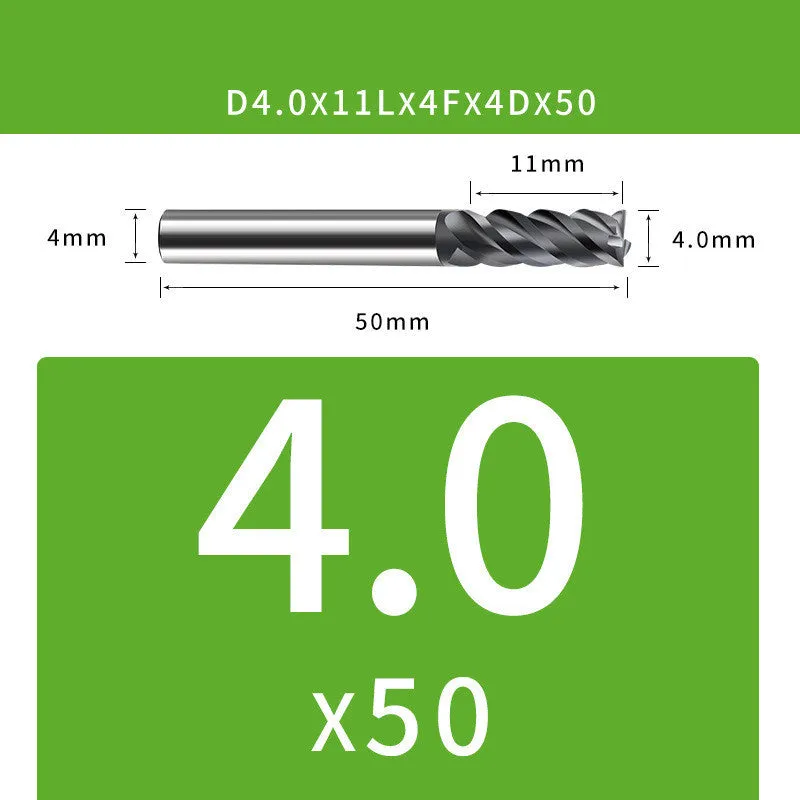
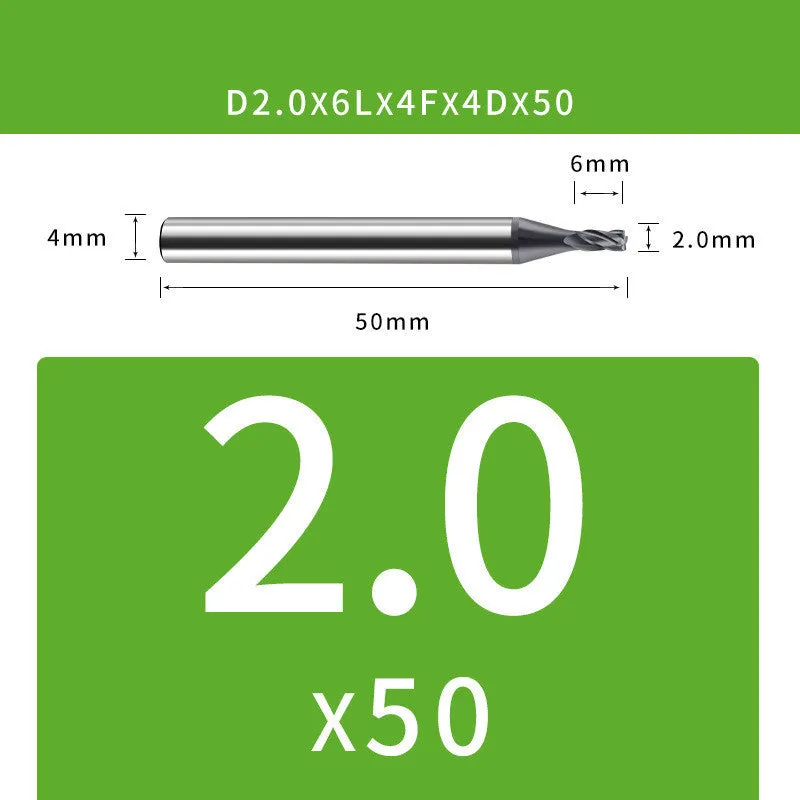
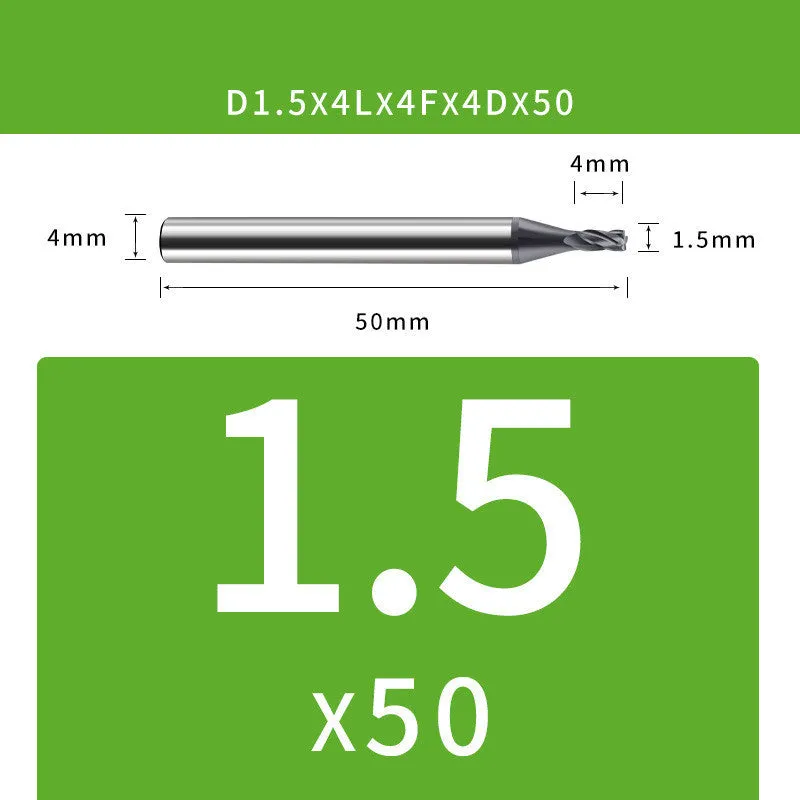
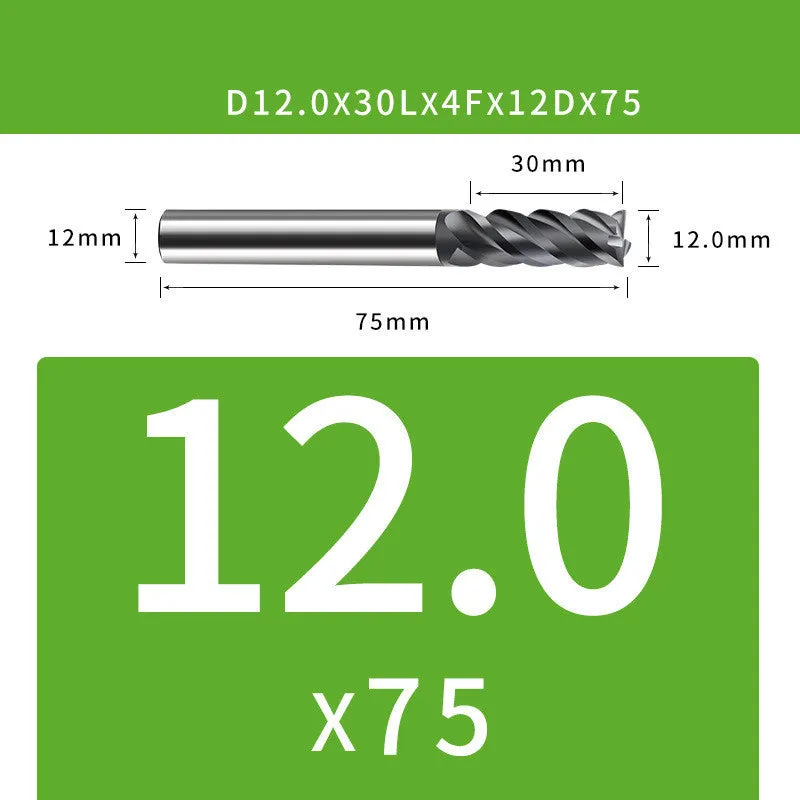
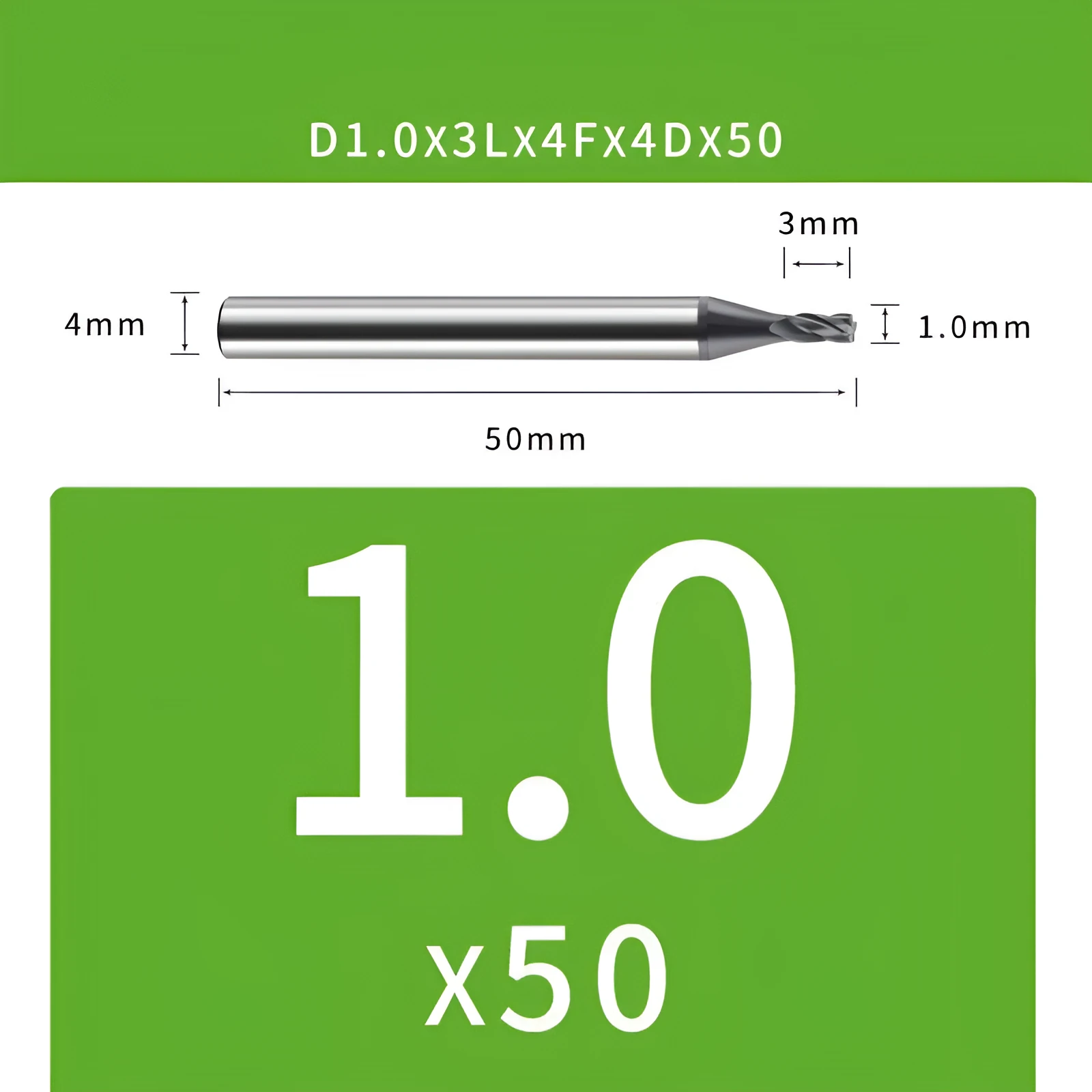
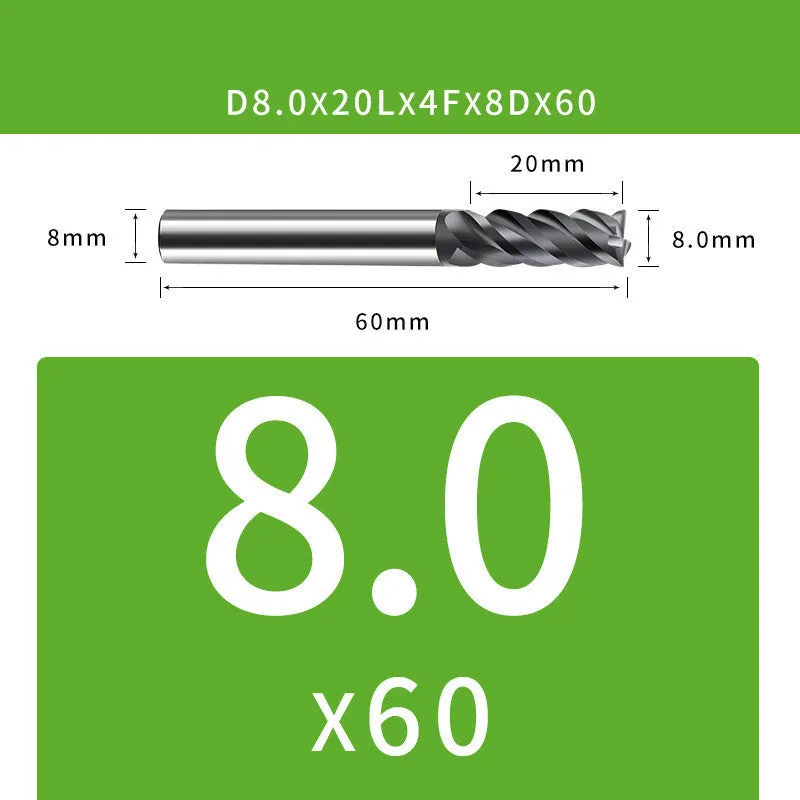
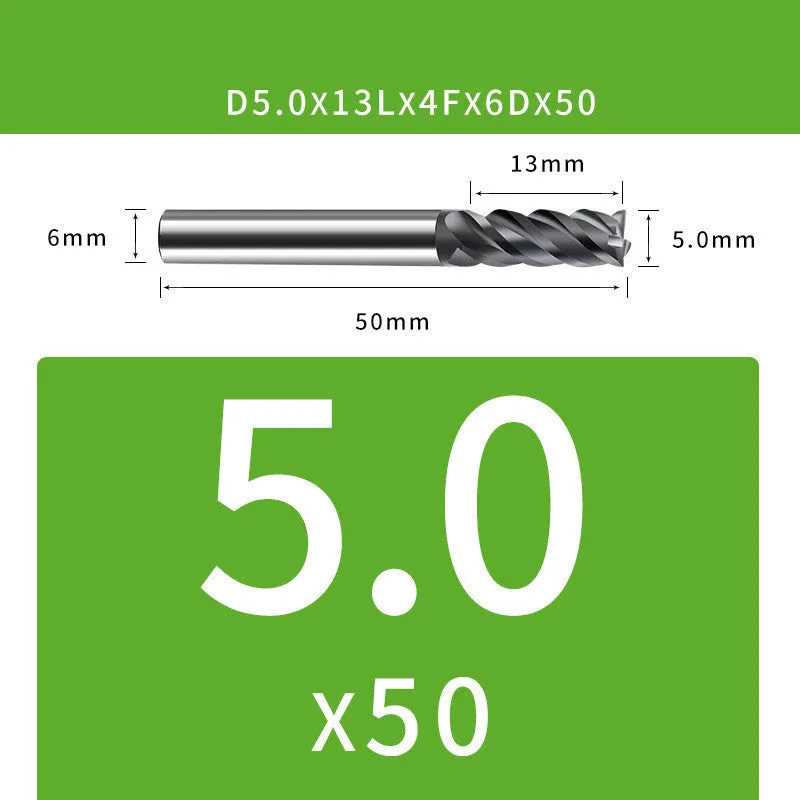
A key practical advantage is the availability of multiple size configurations, detailed in the product's option list. The cutting diameter, which directly determines the width of the cut, ranges from 1mm to 12mm. The function length, the portion of the tool actively engaged in cutting, ranges from 3mm to 36mm. Users can select a tool like D1.0 3L for very fine, shallow work or a tool like D12 30L for broader, deeper milling passes up to the 50mm maximum cutting depth. This range covers many common milling and engraving needs without requiring a large inventory of highly specialised single-use tools.
Uses and Placement
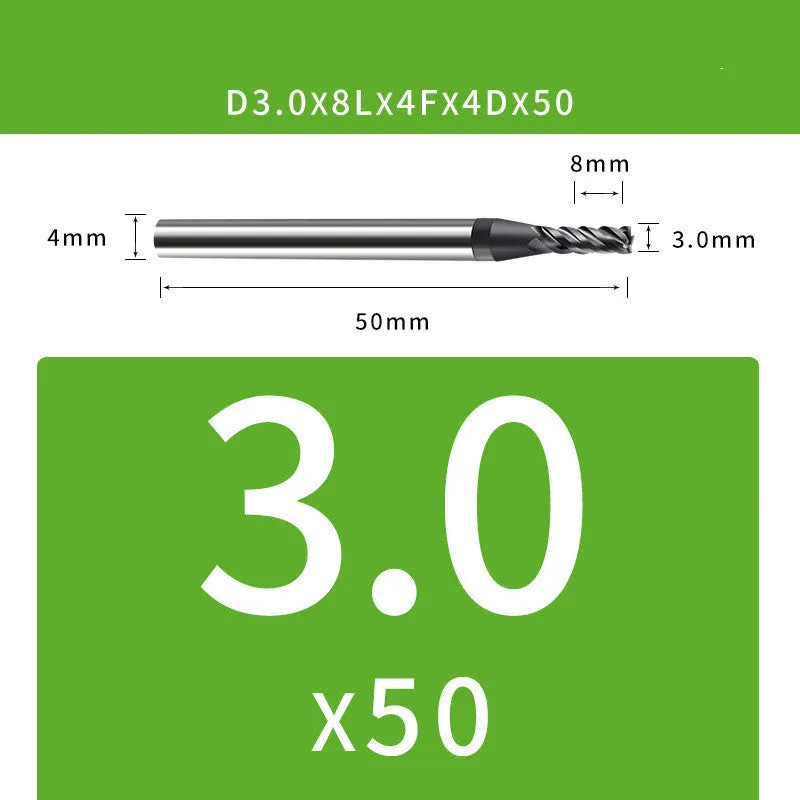
This end mill is suited to a spectrum of milling tasks, from professional fabrication to detailed hobby projects.
Event or Professional Use
In a professional or workshop context, this tool can be employed for precision machining components, creating moulds, sign-making, or detailed part manufacturing. The availability of specific sizes like D8 20L or D10 25L allows for selecting a tool optimised for the job's scale and required finish. The 35-degree helix angle influences the cutting action and finish, while the 90-degree chamfer angle is a defined part of the tool's tip geometry. The maximum cutting depth of 50mm supports operations like deep pocketing or profiling in softer materials or multiple passes in harder ones.
Everyday Home Use
For advanced hobbyists, makers, or small-scale workshops with CNC routers, this end mill enables detailed woodworking, plastic fabrication, light metal engraving, and creating intricate decorative items. The smaller diameter options (e.g., D1.0, D1.5, D2.0) are particularly useful for fine detail work, inlay, or precise lettering. The clear specification of dimensions like the ball diameter and contour radius (both 1-12mm) helps users plan their toolpaths and design files accurately to achieve the intended results, whether for a personal project or a small batch of items.
Benefits and Buying Value
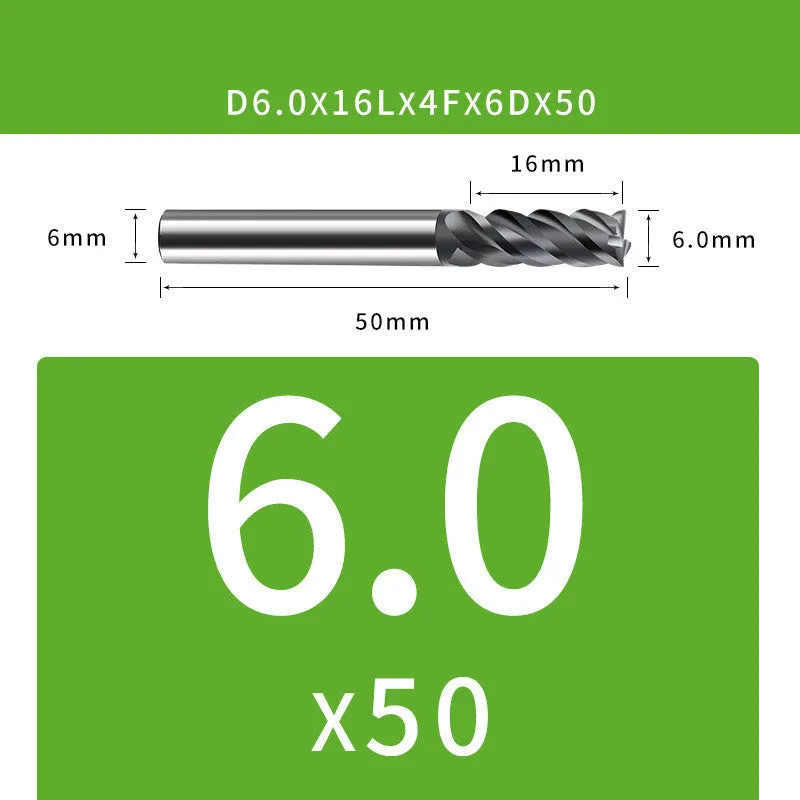
The value of this end mill lies in its specification-driven design, which offers clarity and suitability for intended tasks.
Reuse and Low Maintenance
As a solid tungsten steel tool, it is built for repeated use across multiple projects when operated within its designed parameters. Proper tool handling, storage, and adherence to recommended machine speeds and feeds for the material being cut will support its longevity. The tool does not have disposable components, aligning with a model of reuse common in machining. Maintenance involves standard practices like cleaning after use and inspecting for wear.
Why Choose This Product
This product presents a clear set of technical specifications—cutting diameter, function length, flute count, helix angle—that allow for informed selection based on a milling project's needs. The range of available sizes within a single product listing provides flexibility. The use of tungsten steel as the base material is a practical choice for a cutting tool. The value is in the precise application of a correctly sized tool for the job, which can contribute to cleaner cuts, reduced machine strain, and efficient project completion without unsupported claims about performance or lifespan.